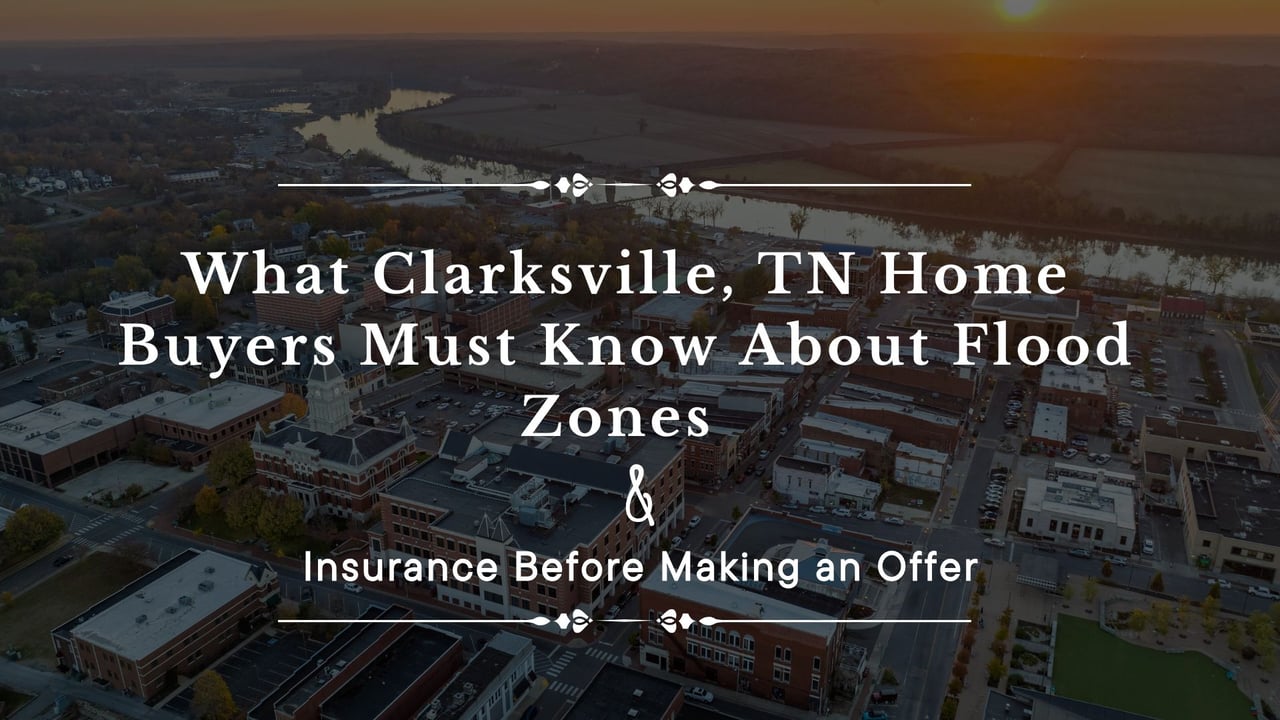
What Clarksville, TN Home Buyers Must Know About Flood Zones & Insurance Before Making an Offer
Blog Post Bret Ceren January 22, 2026
Blog Post Bret Ceren January 22, 2026
Buying a home is one of life's biggest investments, and in vibrant Clarksville, Tennessee, the market is exciting! However, every smart home buyer must do their due diligence. One critical, often overlooked step is understanding a property’s flood zone designation and the associated flood insurance requirements. Skipping this can lead to unexpected costs and major headaches down the road.
What exactly is a flood zone? It’s an area identified by the Federal Emergency Management Agency (FEMA) that indicates the level of risk for flooding. Your mortgage lender will rely heavily on these maps.
Here’s a quick breakdown of the most common zones you’ll encounter when looking at Clarksville homes:
Special Flood Hazard Areas (SFHAs): These are high-risk zones, often designated with the letters A or V (like AE or A). Properties in these zones have at least a 25% chance of flooding during a 30-year mortgage.
The requirement: If your property falls in an SFHA, your mortgage lender will require you to purchase flood insurance through the National Flood Insurance Program (NFIP) or a private carrier.
Moderate to Low-Risk Areas: These are typically labeled with the letter X (e.g., Zone X or X500).
The requirement: Flood insurance is not federally mandated in these zones, but it is highly recommended. Over 20% of NFIP claims come from properties outside of high-risk areas!
Key Takeaway: Always ask your real estate agent for a property's official flood zone determination. Even if a property is out of an SFHA, it’s wise to consider the protection.
Unlike standard homeowner's policies that cover damage from things like fire and theft, flood damage is not covered. You need a separate flood insurance policy.
Your flood insurance premium is determined by several factors, not just the FEMA flood zone. Factors include:
The amount of coverage (for the building and/or contents).
The property's elevation.
The year it was built.
The type of foundation (basement, crawlspace, slab).
A property being placed in a high-risk zone could significantly increase your monthly ownership costs, impacting your total home budget.
If a Clarksville property is financed with a federally backed mortgage (which is most of them), your lender makes the final call. If they determine the property is in a high-risk zone, you must comply with their flood insurance requirement before closing.
Before you finalize your purchase agreement on a piece of Clarksville real estate, take these three crucial steps:
Check the Official Maps: Do not rely solely on the listing description. Use the official FEMA flood map service to verify the property's location.
Get a Quote Immediately: Contact an insurance agent before you make an offer to get an accurate quote for the flood insurance premium. This ensures the full cost of ownership is factored into your budget.
Investigate Mitigation: Ask the seller about any past flooding events or flood mitigation measures they’ve taken. Sometimes, a property’s elevation certificate can be used to lower the insurance premium.
Understanding flood zones and the cost of flood insurance is vital to protecting your investment and peace of mind. By addressing this upfront, you can confidently navigate the Clarksville, TN real estate market and secure your dream home without costly surprises.
For expert guidance, comprehensive listings of Tennessee best homes, and local market insights to help you with your home-buying journey, be sure to visit: tennesseebesthomes.com/
Stay up to date on the latest real estate trends.

Blog Post
Blog Post

Blog Post
Blog Post

Blog Post
Blog Post
Blog Post
Blog Post
Blog Post
I am committed to guiding you every step of the way—whether you're buying a home, selling a property, or securing a mortgage. Whatever your needs, I've got you covered.