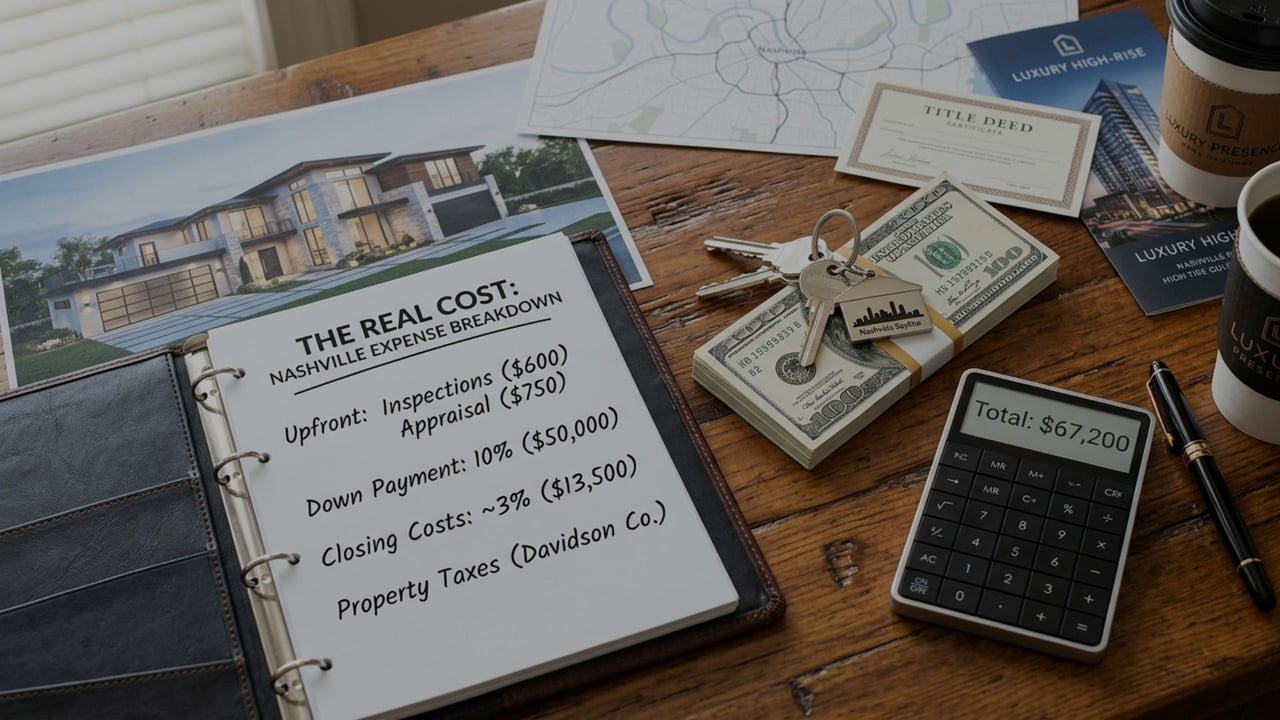
Building a custom home in Tennessee is an incredible way to get exactly what you want, whether you are looking for a sprawling acreage in Maury County or a hilltop view in East Tennessee. But if you are evaluating builders based solely on their "start from" base price or standard cost per square foot, you are only seeing a fraction of the financial picture.
To ensure your budget survives the reality of construction, you need to look below the surface. Based on expert builder insights, here is a deep dive into the complex, often overlooked expenses that can add tens of thousands of dollars to a Tennessee home build.
1. Advanced Site Preparation: The Battle with Limestone and Water
When a builder quotes a base price, they are almost always assuming a perfectly flat, clear lot with ideal soil conditions. Real Tennessee land is rarely that cooperative. Site preparation goes far beyond simply clearing trees.
- The Hidden Rock Hazard (Tennessee Limestone): Subsurface rock is one of the most unpredictable expenses in Tennessee construction. If your excavation crew encounters the state’s abundant limestone, standard digging equipment won't cut it. You will face unexpected costs for specialized engineering assessments, heavy-duty rock-hammering equipment, or even blasting crews. A single subterranean rock ledge can instantly add $5,000 to $20,000+ to your excavation budget.
- Water, Moisture, and Subgrade Dynamics: Tennessee’s climate and varied typography mean water management is a constant challenge. High water tables or poor natural runoff require significant civil engineering, complex grading plans, and extensive drainage systems (like French drains or swales).
- Engineered Fill Dirt and Foundation Alterations: If your soil contains too much clay or holds excessive moisture, it may not be stable enough to support a foundation. You will have to pay to haul out the bad soil and truck in thousands of dollars of engineered fill dirt. In severe cases, moisture and slope issues will force an unexpected change in your foundation design - forcing you to upgrade from a standard slab to a conditioned crawlspace or a stepped, engineered poured-wall foundation.
2. Infrastructure, Distance, and the "Rural Tax"
The very thing that makes Tennessee acreage beautiful - its untouched, natural privacy - makes it expensive to develop. Bringing modern infrastructure to an unserviced lot is a major variable.
- The Soil "Perc" Test and Alternative Septic Systems: If municipal sewer isn't available, your build relies entirely on a soil percolation (perc) test to determine how well the ground absorbs water. If the soil fails a standard perc test due to high rock content or dense clay, you cannot install a conventional septic system. Instead, you will be legally required to install an alternative or engineered septic system (such as a mound or drip system), which easily doubles or triples the cost, frequently running between $15,000 and $35,000.
- Utility Line Extensions: Do not assume that because power lines run along the main road, connecting your house is simple. Utility companies charge by the foot to drop poles and run lines. If your home sits 500 feet back from the road, bringing electricity, municipal water, and high-speed internet to the home site can cost a small fortune.
3. Local Regulatory Hurdles: Permits and Impact Fees
Government and municipal fees vary drastically across Tennessee, meaning the exact same house plan can cost wildly different amounts to build depending on which county line it falls across.
- County Impact Fees: To keep up with rapid population growth, fast-developing areas like Williamson County or Rutherford County levy substantial "impact fees" or privilege taxes on new construction. These fees are designed to fund local infrastructure like schools and roads. Unlike a standard building permit fee, which might be a few hundred dollars, impact fees can run anywhere from $3,000 to over $10,000 per structure before a single nail is driven.
4. Structural Variations: Slopes and Engineering
A house plan designed for a flat lot cannot simply be dropped onto a classic Tennessee hillside without significant modifications.
- Topography Modifications: Building on a slope requires a structural engineer to design custom footings and retaining walls to ensure the home's long-term stability. The cost of concrete, steel reinforcement, and the labor required to build these engineered systems is rarely included in a builder's initial model home pricing.
Build with Confidence and Local Expertise
The key to a successful custom build in the Volunteer State is eliminating surprises. By partnering with experts who understand the local geology, county regulations, and engineering requirements early in the process, you can build a realistic budget alongside your dream home.
Before you buy a piece of land or sign a construction contract, get the right local guidance. Visit Tennessee Best Homes to connect with real estate and construction professionals who know the intricacies of the Tennessee housing market inside and out.